
Sample Request FAQs
Quick answers about requesting and receiving free samples from Anchor-tech.
Can you provide samples?
Yes. Please share some basic information about your project with us — for example, where the material will be used and at what operating temperature. Rest assured this is only so we can help you choose the most suitable material, model, and specification. We will never disclose your project details to any third party.
Can we still request samples if we cannot disclose any project information?
No. If you are unwilling to share any information about your project, we are not obligated to support your R&D effort. Please respect the labor involved: preparing each sample requires a dedicated colleague and is quite time-consuming. Moreover, without knowing where and how you intend to use our product, we cannot even determine whether it is suitable for your application.
Are samples free, and how much can I request?
We provide 2 free samples of aerogel fabric, each sized 150 mm × 200 mm × T (or A4 size). If you need a larger quantity or many pieces, please let us know the reason — we are glad to support you. However, if you have never seen our sample before and only want to take a look, please do not casually request large amounts. A dedicated colleague must prepare every sample, which takes considerable effort. You may first take a look; once you confirm it is likely suitable for your project, you can request more from us.
Who pays for shipping?
Shipping costs must be borne by the customer. Please provide us with your FedEx account number and the recipient information (including name, address, phone number, postal code, etc.), and we will arrange the shipment for you.
How long does it take to prepare samples?
If the item is in stock, preparation generally takes 3–7 days. If it is out of stock and requires custom manufacturing, it takes 1–2 weeks. We will prepare your samples as quickly as possible.
Aerogel Textiles for Industrial Protective Fabrics and Thermal Barriers
In industrial safety and process environments, the challenge is rarely “keeping warm” in the consumer sense — it is engineering a thermal barrier that protects workers and equipment without sacrificing dexterity, mobility, or space. Foundries, petrochemical plants, cryogenic facilities, cold-storage logistics, and high-temperature maintenance operations all need flexible insulation layers that perform in thin profiles, survive flexing and laundering cycles, and integrate into gloves, garments, covers, and soft insulation systems.
Aerogel-enhanced textiles have emerged as a practical material platform for these applications. Guangzhou Anchor Technology Co., Ltd. manufactures aerogel blankets, ultra-thin films, and custom-shaped parts that serve as thermal-barrier layers in flexible constructions, alongside its board and coating product lines, covering service temperatures from -200°C to 850°C. This article is written for product engineers, PPE manufacturers, and industrial buyers evaluating aerogel materials for protective fabric applications.
Why Thin Thermal Barriers Matter in Industrial PPE
Conventional insulating textiles — thick batting, heavy fleece, multi-layer quilting — achieve thermal protection through bulk. In industrial settings that bulk has direct costs:
- Dexterity loss. A heavily insulated glove reduces grip, tactile feedback, and fine motor control, which is itself a safety hazard around machinery and hot work.
- Heat stress trade-offs. Garments thick enough for thermal protection in cold or cryogenic environments can cause heat stress during active work, driving non-compliance with PPE protocols.
- Space constraints in soft insulation. Removable insulation jackets, valve covers, and flexible pipe wraps often must fit within congested plant layouts where thick fibrous layers simply do not fit.
Aerogel-based layers decouple thermal resistance from thickness. A thin aerogel film or blanket layer within a fabric laminate can deliver meaningful thermal barrier performance while keeping the overall construction slim and flexible. As with any material claim, actual performance in a finished product depends on the full laminate design and should be validated by the product manufacturer against the relevant protective-clothing or insulation standards for their market.
Product Forms for Flexible and Textile Applications
Different aerogel product forms integrate into textile and soft-goods constructions in different ways:
- Ultra-thin aerogel films are the natural fit for laminated protective fabrics. Layered between shell and lining textiles, they add a thermal barrier without perceptible bulk — relevant to gloves, garment inserts, and flexible pads.
- Flexible aerogel blankets serve where larger continuous areas need insulating: removable insulation jackets, equipment covers, curtain-style thermal barriers, and the insulating core of industrial soft goods.
- Custom-shaped parts support repeatable PPE and soft-goods production — die-cut inserts for gloves and footwear, pre-formed panels for insulation jackets, and shaped pieces for recurring equipment geometries.
- Aerogel blankets and boards from the broader product range cover adjacent plant-level insulation needs within the same facility, allowing buyers to consolidate suppliers across rigid and flexible applications.
Application Areas
Industrial gloves and hand protection. Cryogenic handling, hot-surface work, and cold-storage operations all demand hand protection that preserves dexterity. Thin aerogel layers allow glove designers to place thermal barriers on the back of the hand, palm, or cuff without building a bulky multi-layer mitt. PPE manufacturers should note that finished gloves must be certified by the glove manufacturer against applicable regional standards; the aerogel layer is a component, not a certified product in itself.
Protective garments and inserts. For cryogenic aprons, cold-environment workwear panels, and proximity-work garments, aerogel films and blanket sections provide localized thermal barriers at knees, shoulders, torso fronts, and limb panels where exposure is greatest.
Flexible industrial insulation. Removable jackets for valves, flanges, and instruments; flexible wraps for irregular pipework; and thermal-barrier curtains between hot and cold zones all benefit from thin, flexible, low-conductivity cores that tolerate repeated removal and reinstallation. Our materials span service temperatures from -200°C to 850°C, covering cryogenic through high-temperature duties.
Footwear and accessory inserts. Die-cut aerogel insoles and toe-cap inserts add thermal barriers in cold-storage and outdoor industrial footwear without raising the boot profile.
B2B Sourcing Considerations
For PPE manufacturers, textile converters, and industrial buyers sourcing aerogel materials for flexible applications:
- Clarify your role in certification. Aerogel layers are supplied as materials. Certification of finished gloves, garments, or insulation jackets against EN, ANSI, ISO, or other regional standards remains the responsibility of the finished-product manufacturer. Plan your testing budget accordingly.
- Evaluate durability in your construction. Flexing, compression, laundering, and abrasion all affect textile-integrated insulation. Request samples and test them within your actual laminate structure — not in isolation — across realistic duty cycles.
- Confirm formats and tolerances. Ask for available film thicknesses, blanket thicknesses, roll widths, and sheet sizes, plus thickness tolerances across lots. Consistency matters when die-cutting components at scale.
- Custom converting. If you need pre-cut shapes or kitted components, discuss tooling, minimum order quantities, and dimensional inspection with the supplier early in product development.
- Data transparency. Request current technical data sheets, and confirm which values are typical versus guaranteed and which test methods were used, so materials from different vendors can be compared fairly.
Guangzhou Anchor Technology supplies aerogel films, blankets, and custom parts to product developers and industrial buyers, with samples available for evaluation. To discuss a protective fabric or flexible insulation project, contact our team.
FAQ
No. We supply aerogel films, blankets, and custom-shaped components as materials to PPE and soft-goods manufacturers. Certification of finished gloves or garments against regional protective-clothing standards is carried out by the finished-product manufacturer.
Our product range covers service temperatures from -200°C to 850°C, spanning cryogenic handling through high-temperature industrial duties. Specific constructions should be validated in your finished product under realistic use conditions.
Yes. We fabricate custom-shaped parts to customer drawings, including repeat components for gloves, garments, and insulation jackets. Share your patterns and estimated volumes with us to discuss tooling, tolerances, and lead times.
Related Articles & Applications
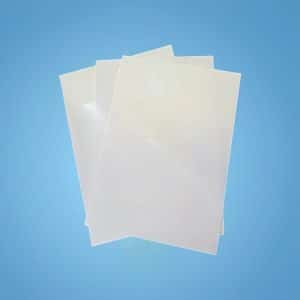
AGF-AR Aerogel Film with Release Liner
AGF-AR ultra-thin aerogel insulation film with release liner for easy die-cutting. Ideal for batt...
Read more →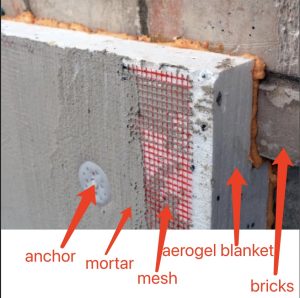
Aerogel Building Insulation Blanket (AG65)
AG65 aerogel blanket for building insulation: ultra-low thermal conductivity for walls, roofs and...
Read more →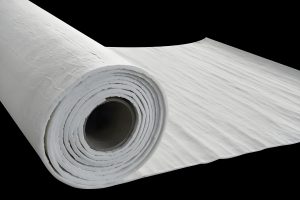
Aerogel Blanket Plus (AG65plus)
AG65plus reinforced aerogel blanket for demanding pipeline and equipment insulation. Low thermal ...
Read more →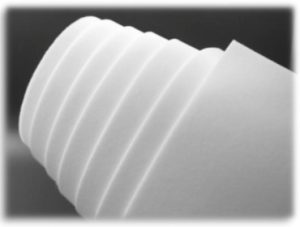
Aerogel Insulation Sponge (AG-Sponge)
AG-Sponge aerogel insulation sponge for flexible, compressible thermal insulation. Lightweight wi...
Read more → English
  Chinese (China)
  Portuguese
  Spanish
  French
  Italian
  Turkish
  Vietnamese
  German
  Japanese
  Korean
  Hindi
Hindi  Arabic
  Polish
  Chinese (Taiwan)
  Malay
Malay  Thai
Thai  Finnish
  Dutch
Dutch  Swedish
  Slovenian