AG12CB Building Aerogel Coating
Product Introduction
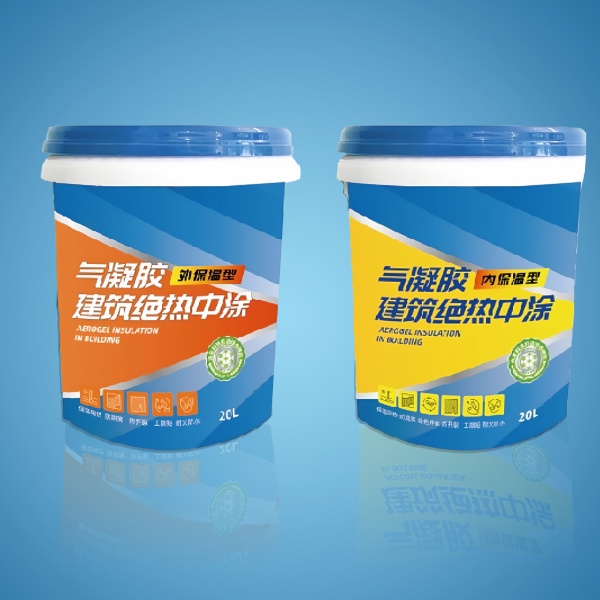
AG12CB Aerogel Insulation Coating is a high-performance thermal insulation coating specifically developed by our company to meet the demands of building insulation. It is meticulously formulated using silica aerogel powder and high-performance resins, offering exceptional thermal insulation and soundproofing properties while being lightweight, moisture-resistant, and highly adhesive. As a non-toxic, environmentally friendly water-based coating, AG12CB is both safe and sustainable. It must be used in conjunction with a primer and is suitable for application on both interior and exterior walls of buildings. The incorporation of aerogel powder in its formulation grants it significantly superior insulation performance compared to traditional architectural coatings, effectively reducing temperature differences between indoor and outdoor environments and enhancing energy efficiency.
AG12CB boasts a thermal conductivity of just 0.044 W/(m·K) at room temperature, which is considerably lower than that of standard architectural coatings. This enables it to minimize indoor temperature rises in hot environments and reduce heat loss in cold conditions. Additionally, thanks to its nanostructured microporous composition, the coating not only effectively prevents heat transfer but also serves as an excellent soundproofing material, mitigating external noise interference and improving indoor comfort. Compared to conventional insulation coatings, AG12CB has a lower density, reducing the structural load on walls while maintaining outstanding weather resistance and long-term stability. This makes it well-suited for various climate conditions and diverse building insulation requirements.
In terms of application, AG12CB Aerogel Insulation Coating can be applied using troweling or spraying methods, making it easy and convenient to use. Its superior insulation performance and lightweight nature effectively eliminate the common issues associated with traditional insulation coatings, such as excessive thickness and cumbersome application. This enhances construction efficiency, reduces labor costs, and shortens project timelines. Whether for new construction or renovation projects, AG12CB provides a premium insulation solution, contributing to the development of energy-efficient, environmentally friendly, and comfortable living spaces.
Product Advantages
- Thermal insulation.
- Lightweight and thin.
- Easy to apply.
- Sound insulation and noise reduction.
- Moisture resistance and condensation prevention.
- Eco-friendly.
Typical Application
- Interior and exterior walls of buildings
- Bedroom
- Children’s room
- Music room
Technical Parameters
Product Model | AG12CB | Appearance | White semi-solid paste |
Packaging | 20L | Application Method | Troweling, spraying |
Thermal Conductivity | ≤0.044 W/(m·K) | Density | ≤0.50 kg/m³ |
Bonding Strength | ≥0.60 MPa | Usage Temperature | ≤120℃ |
Application Temperature | 5~40℃ | Dry Film Thickness | 2mm |
Coating Amount | 1-1.2 kg/m² | Drying Time | ≤8h (at room temperature) |
Manufacturer & Engineering Notes
Manufacturing & Project Experience
AG12CB is developed and produced by Anchor Technology specifically for building insulation, using silica aerogel powder compounded with high-performance resins under factory-controlled conditions. The published conductivity, density and bonding-strength values reflect the standard production grade, and supporting documentation can be provided for project submittals. The technical team regularly assists buyers with material take-offs from elevation drawings or wall schedules, converting areas into 20 L unit quantities using the published 1–1.2 kg/m² consumption, and can advise on primer selection for concrete, render or masonry substrates. Samples for trial troweling or spraying on the actual substrate can be arranged through the sales team.
Engineering Boundaries & Custom Options
AG12CB is a standard building insulation grade applied at a published 2 mm dry film thickness; customized builds or system variations should be discussed with the factory before specification, since the listed parameters apply to the standard system. Its boundaries should be stated plainly: with thermal conductivity at or below 0.044 W/(m·K), a 2 mm film moderates surface temperature and improves comfort, but it does not deliver the U-values of thick conventional insulation, and usage temperature is limited to 120°C. Acoustic benefit is supplementary rather than a rated sound-insulation assembly. For code-driven energy targets, we recommend verifying the wall build-up calculation with the project engineer.
Sample Request FAQs
Quick answers about requesting and receiving free samples from Anchor-tech.
Can you provide samples?
Yes. Please share some basic information about your project with us — for example, where the material will be used and at what operating temperature. Rest assured this is only so we can help you choose the most suitable material, model, and specification. We will never disclose your project details to any third party.
Can we still request samples if we cannot disclose any project information?
No. If you are unwilling to share any information about your project, we are not obligated to support your R&D effort. Please respect the labor involved: preparing each sample requires a dedicated colleague and is quite time-consuming. Moreover, without knowing where and how you intend to use our product, we cannot even determine whether it is suitable for your application.
Are samples free, and how much can I request?
We provide free samples of aerogel coating up to 100 g. If you need a larger quantity or many pieces, please let us know the reason — we are glad to support you. However, if you have never seen our sample before and only want to take a look, please do not casually request large amounts. A dedicated colleague must prepare every sample, which takes considerable effort. You may first take a look; once you confirm it is likely suitable for your project, you can request more from us.
Who pays for shipping?
Shipping costs must be borne by the customer. Please provide us with your FedEx account number and the recipient information (including name, address, phone number, postal code, etc.), and we will arrange the shipment for you.
How long does it take to prepare samples?
If the item is in stock, preparation generally takes 3–7 days. If it is out of stock and requires custom manufacturing, it takes 1–2 weeks. We will prepare your samples as quickly as possible.
Frequently Asked Questions about AG12CB Building Aerogel Coating
Technical answers for overseas buyers, engineers, and project specifiers. For project-critical values, request the current TDS before final design.
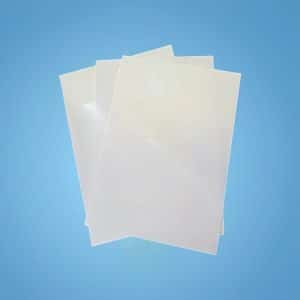
AG12CB is a water-based thermal insulation coating developed for building envelopes, formulated with silica aerogel powder and high-performance resins. It appears as a white semi-solid paste and provides thermal insulation and soundproofing in a lightweight, moisture-resistant, highly adhesive film. It is non-toxic and environmentally friendly, must be used together with a primer, and is suitable for both interior and exterior walls. Typical applications include building walls, bedrooms, children’s rooms and music rooms where combined thermal and acoustic comfort is required. The aerogel content gives it significantly better insulation performance than traditional architectural coatings.
Published parameters for AG12CB include thermal conductivity of 0.044 W/(m·K) or below at room temperature, density of 0.50 kg/m³ or below, and bonding strength of at least 0.60 MPa. The low conductivity helps reduce indoor temperature rise in hot weather and heat loss in cold conditions, while the nanostructured microporous composition also provides sound insulation against external noise. The coating’s low density reduces structural load on walls compared with conventional insulation coatings, while maintaining weather resistance and long-term stability. Usage temperature is rated up to 120°C. Project-specific U-value calculations should use confirmed dry film thickness.
The published dry film thickness for AG12CB is 2 mm, with a coating amount of 1–1.2 kg per square meter. This thin-build profile is one of its practical advantages over traditional thick insulation coatings, improving construction efficiency and reducing labor and project duration. Material estimation for a project can start from these figures: multiply net wall area by 1–1.2 kg/m² and add an allowance for surface roughness and wastage. Where higher thermal resistance is required, the feasibility of multiple coats or greater build should be confirmed with the technical team, since the published parameters are based on the standard 2 mm system.
AG12CB is applied by troweling or spraying over a primer, at an application temperature of 5–40°C. Drying time is 8 hours or less at room temperature. The substrate should be sound, clean, dry and free of dust, oil and loose material before priming; the primer is required as part of the system and contributes to the published bonding strength of at least 0.60 MPa. Because the product is a semi-solid paste, trowel application suits flat wall areas while spraying suits larger elevations. Recoating intervals, maximum build per pass and finishing options are not detailed on the page; confirm them in the current TDS before preparing the method statement.
AG12CB is packed in 20 L units as a white semi-solid paste. Key limitations to note during specification: it is an insulation coating, not a replacement for thick board or blanket insulation where very low U-values are mandated; the rated usage temperature is 120°C, so it is not intended for high-temperature industrial equipment; and a primer is mandatory. It is designed for building walls in various climate conditions, interior or exterior. Packaging shelf life, storage temperature range and minimum order quantities are not published; confirm these details, plus color or topcoat finishing options, with the sales team or in the current TDS at quotation stage.
 English
  Chinese (China)
  Portuguese
  Spanish
  French
  Italian
  Turkish
  Vietnamese
  German
  Japanese
  Korean
  Hindi
Hindi  Arabic
  Polish
  Chinese (Taiwan)
  Malay
Malay  Thai
Thai  Finnish
  Dutch
Dutch  Swedish
  Slovenian