
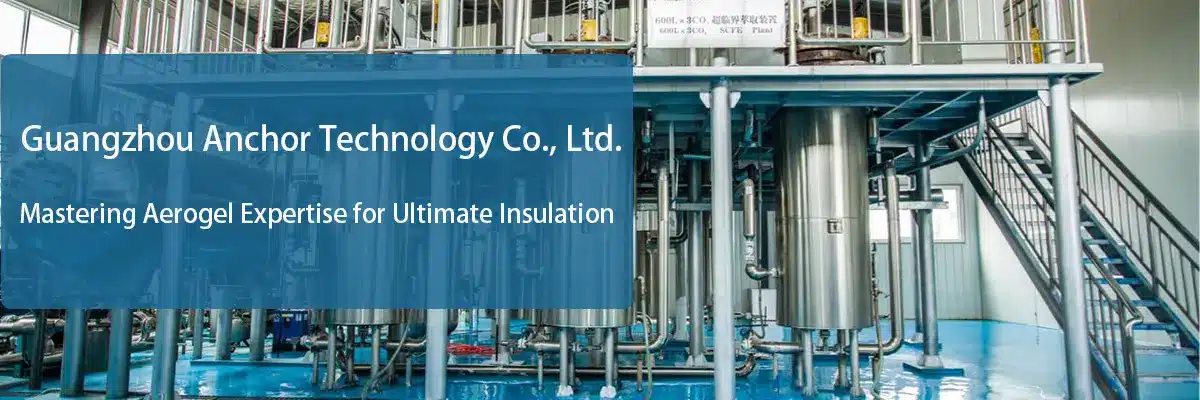
Aerogel Tube

Product Description
Aerogel Tube is a customized rigid aerogel tube casing with enhanced fibers as its base material. It exhibits high physical strength, low thermal conductivity, and ease of installation. It is primarily used for insulation in various high-temperature pipelines.
Typical Applications
- Petrochemical industry for high, medium, and low-temperature steam pipelines.
- High-temperature industrial furnaces.
- Thermal insulation for district heating networks and pipeline equipment.
- HVAC (Heating, Ventilation, and Air Conditioning) systems.
Product Advantages
- High operating temperature: Aerogel Tube has a maximum long-term operating temperature of 850°C.
- Highly customizable: It can be tailored to your needs, allowing customization of the desired shape.
- Outstanding insulation performance: With an ultra-low thermal conductivity, Aerogel Tube achieves equivalent insulation results while being only one-fourth the thickness of traditional materials.
- Excellent physical strength: It exhibits excellent compressive and tensile strength.
Product Specifications
Product Name | Aerogel Tube | Thickness | 10-100mm or customized as required |
Width | 500-1500mm (customizable) | Applicable temperature | -200~1000℃ |
Manufacturer & Engineering Notes
Manufacturing & Project Experience
Anchor Aerogel manufactures aerogel tubes as customized rigid casings built from enhanced-fiber base material, serving petrochemical, district heating, furnace, and HVAC projects. Each order is produced to the project's pipe dimensions and service conditions, so our team works from your piping specifications - diameter, thickness target, temperature, and environment - to propose the construction, prepare samples or trial sections where feasible, and align packaging for site delivery. We handle export projects for overseas EPC and maintenance buyers, and current technical documentation, including the TDS, is available on request to support material approval within your project specifications.
Engineering Boundaries & Custom Options
The aerogel tube is a customized product rather than an off-the-shelf catalog item: thickness (10-100 mm), width (500-1500 mm), and shape are all built to order. Its published envelope is -200 to 1000°C applicable temperature with 850°C as the maximum long-term operating point; designs should respect the continuous figure. The one-fourth-thickness claim versus traditional materials is a general comparison, not a guaranteed ratio for every duty - verify with a heat-loss calculation for your line. Confirm density, strength, and conductivity values for your specific build in the current TDS before finalizing the insulation specification.
Sample Request FAQs
Quick answers about requesting and receiving free samples from Anchor-tech.
Can you provide samples?
Yes. Please share some basic information about your project with us — for example, where the material will be used and at what operating temperature. Rest assured this is only so we can help you choose the most suitable material, model, and specification. We will never disclose your project details to any third party.
Can we still request samples if we cannot disclose any project information?
No. If you are unwilling to share any information about your project, we are not obligated to support your R&D effort. Please respect the labor involved: preparing each sample requires a dedicated colleague and is quite time-consuming. Moreover, without knowing where and how you intend to use our product, we cannot even determine whether it is suitable for your application.
Are samples free, and how much can I request?
We provide 2 free samples of aerogel tube, each sized 150 mm × 200 mm × T (or A4 size). If you need a larger quantity or many pieces, please let us know the reason — we are glad to support you. However, if you have never seen our sample before and only want to take a look, please do not casually request large amounts. A dedicated colleague must prepare every sample, which takes considerable effort. You may first take a look; once you confirm it is likely suitable for your project, you can request more from us.
Who pays for shipping?
Shipping costs must be borne by the customer. Please provide us with your FedEx account number and the recipient information (including name, address, phone number, postal code, etc.), and we will arrange the shipment for you.
How long does it take to prepare samples?
If the item is in stock, preparation generally takes 3–7 days. If it is out of stock and requires custom manufacturing, it takes 1–2 weeks. We will prepare your samples as quickly as possible.
Frequently Asked Questions about Aerogel Tube
Technical answers for overseas buyers, engineers, and project specifiers. For project-critical values, request the current TDS before final design.
Aerogel Tube is a customized rigid pipe-insulation casing made from enhanced fibers as the base material combined with aerogel, giving high physical strength, low thermal conductivity, and ease of installation. Typical applications listed by the manufacturer include high-, medium-, and low-temperature steam pipelines in the petrochemical industry, high-temperature industrial furnaces, district heating networks and pipeline equipment, and HVAC systems. The rigid tubular form lets maintenance and installation teams fit the casing directly around pipes, delivering aerogel-level insulation performance in a format suited to round pipework.
The published specification gives an applicable temperature range of -200 to 1000°C, with a maximum long-term operating temperature of 850°C. This covers cryogenic-leaning service through high-temperature steam and furnace applications. When specifying, treat 850°C as the continuous ceiling and the 1000°C figure as the broader resistance boundary, and confirm the rating for your exact build in the current TDS – actual limits can depend on fiber reinforcement and density selected for the project. For critical hot-service lines, on-site validation under real cycling conditions is recommended before full rollout.
Published dimensions are thickness from 10 to 100 mm (or customized as required) and width from 500 to 1500 mm, customizable. The product is described as highly customizable – it can be tailored to the desired shape to match pipe diameters and insulation thickness targets. Because each order is built to project requirements, buyers should provide pipe outer diameter, target insulation thickness, service temperature, and any cladding or jacketing plan so the factory can propose the appropriate construction. With aerogel’s low conductivity, equivalent insulation is achieved at roughly one-fourth the thickness of traditional materials, reducing casing bulk around congested pipework.
The manufacturer states that, thanks to ultra-low thermal conductivity, the aerogel tube achieves equivalent insulation results at only about one-fourth the thickness of traditional materials – a decisive advantage where space around pipes is limited or where weight on supports must be reduced. The enhanced-fiber base gives the casing excellent compressive and tensile strength, so it withstands handling and installation better than fragile lightweight insulators. It is also easier to install as a rigid pre-formed casing than wrapping blankets on complex runs. Specific conductivity values for a given build should be confirmed in the current TDS during technical review.
The rigid casing is designed for ease of installation around pipelines; sections are fitted over the pipe and secured with the project’s standard banding, cladding, or jacketing system. Provide the factory with pipe diameter, operating temperature, and environment (indoor, outdoor, chemical exposure) so the tube’s construction can be matched accordingly. Because the product is customized, dimensional tolerances, joint design, and section length should be agreed during order confirmation. For outdoor or washdown service, discuss weatherproof cladding with your engineering team, and confirm handling guidance to avoid edge damage during installation on site.
 English
  Chinese (China)
  Portuguese
  Spanish
  French
  Italian
  Turkish
  Vietnamese
  German
  Japanese
  Korean
  Hindi
Hindi  Arabic
  Polish
  Chinese (Taiwan)
  Malay
Malay  Thai
Thai  Finnish
  Dutch
Dutch  Swedish
  Slovenian