
Aerogel Board Insulation Panels (AG65B)
Product Description
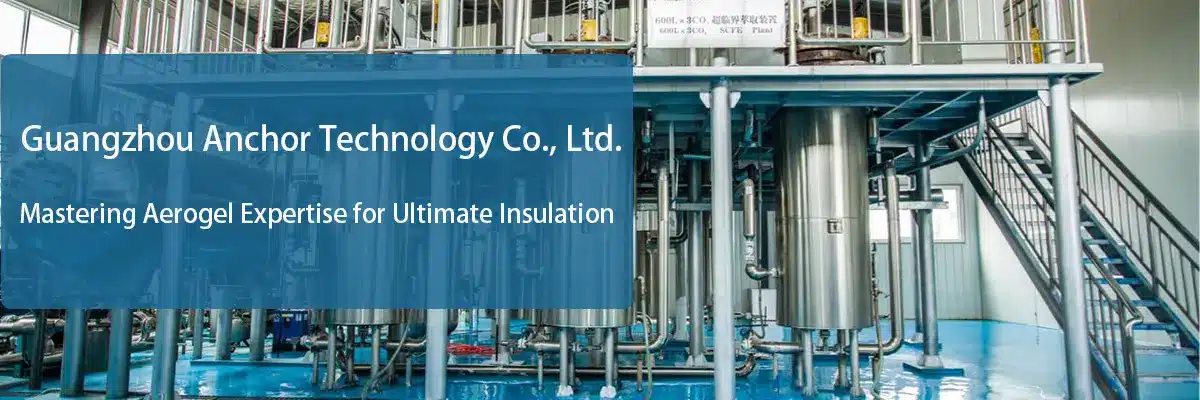
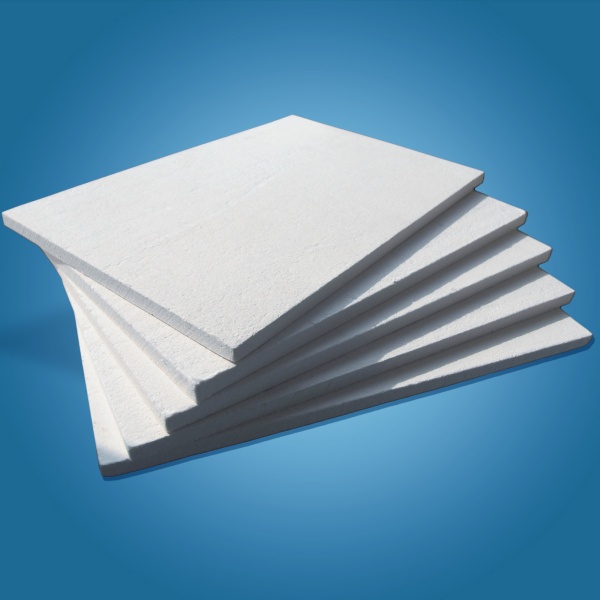
AG65B is a rigid aerogel insulation board made with glass fiber needle-punched felt as its base material. The manufacturing process involves sol-gel technology, where the base material is immersed in a slurry, aged, and then subjected to supercritical extraction to remove organic solvents. This process ensures that nano-porous aerogel is uniformly distributed throughout the material, resulting in a high-performance insulation board with a density of 250-300 kg/m³, capable of withstanding continuous temperatures up to 650°C.
Unlike the flexible AG65, AG65B features a rigid, flat structure that cannot be bent. This makes it particularly suitable for flat surface applications, such as ceramic roller kilns, but not ideal for curved surfaces like pipes or storage tanks.
Aerogel is an ultra-porous material with a porosity of 85%-99%, featuring nanopores smaller than the mean free path of air molecules. This structure completely eliminates heat transfer through convection. Additionally, its extremely high specific surface area effectively reduces heat radiation.
With a low thermal conductivity of just 0.02 W/m·K at room temperature, AG65B is one of the best insulation materials available. In high-temperature environments, it requires only 1/3 to 1/4 the thickness of traditional ceramic fiber or glass fiber insulation to achieve the same thermal resistance. This superior thermal performance makes AG65B the ideal choice for insulation in confined spaces and an excellent solution for cryogenic applications.
Thermal Conductivity
| Temperature(℃) | Thermal Conductivity W/(m*k) |
| 25℃ | 0.021 |
| 100℃ | 0.023 |
| 200℃ | 0.026 |
| 300℃ | 0.029 |
| 400℃ | 0.033 |
| 500℃ | 0.037 |
| 600℃ | 0.041 |
Product Specifications
Thickness | 10mm or customized | Specifications | 885*500mm |
Applicable temperature | -50~650℃ | Density | 250kg/m³ |
Chloride ion content | 0.001% | Thermal conductivity at 25 ℃ | 0.017~0.023W/(m·K) |
Comparison of thermal conductivity of various insulation materials

Typical Applications
- Insulation and thermal protection for industrial heat distribution networks.
- Insulation for medium to high-temperature industrial equipment or furnaces.
- Thermal insulation for steam turbines.
- Insulation for pipeline insulation and thermal protection.
Product Advantages
- High operating temperature: Aerogel Board Insulation Panels (AG65B) has a maximum long-term operating temperature of 650°C.
- Outstanding insulation performance: With an ultra-low thermal conductivity, Aerogel Board Insulation Panels (AG65B) achieves equivalent insulation results while being only one-fourth the thickness of traditional materials.
- Excellent fire resistance: The unique raw materials and production processes of this product provide it with excellent resistance to flame impact.
- Excellent physical strength: Aerogel Board Insulation Panels (AG65B) possesses strong structural integrity and exhibits excellent tensile and compressive strength.
- Smooth surface: The flat surface of Aerogel Board Insulation Panels (AG65B) is suitable for insulation in flat applications.
Manufacturer & Engineering Notes
Manufacturing & Project Experience
Anchor Aerogel manufactures AG65B by immersing glass fiber needle-punched felt in a sol-gel slurry, aging, and removing solvents through supercritical extraction so the aerogel is uniformly distributed through the board. We supply standard 885 x 500 mm panels and customized thicknesses to kiln builders, turbine maintenance contractors, and heat-network integrators, with samples available for qualification and technical review of panel layouts against drawings. Published test values follow the standards cited on this page; items not listed, such as dimensional tolerances and mechanical test data, are confirmed in the current TDS before order acceptance.
Engineering Boundaries & Custom Options
Standard AG65B is a 10 mm rigid board at 250 kg/m3 density, with customized thickness on request. Performance boundaries: maximum long-term operating temperature 650°C within an applicable range of -50 to 650°C, and conductivity rising from 0.021 W/(m·K) at 25°C to 0.041 at 600°C, so thickness must be calculated at service mean temperature. The board is rigid and cannot be bent, making it unsuitable for pipes and tanks; use it on flat surfaces only. It is an insulation layer, not a structural panel; support, joints, and surface protection remain with the system designer.
Sample Request FAQs
Quick answers about requesting and receiving free samples from Anchor-tech.
Can you provide samples?
Yes. Please share some basic information about your project with us — for example, where the material will be used and at what operating temperature. Rest assured this is only so we can help you choose the most suitable material, model, and specification. We will never disclose your project details to any third party.
Can we still request samples if we cannot disclose any project information?
No. If you are unwilling to share any information about your project, we are not obligated to support your R&D effort. Please respect the labor involved: preparing each sample requires a dedicated colleague and is quite time-consuming. Moreover, without knowing where and how you intend to use our product, we cannot even determine whether it is suitable for your application.
Are samples free, and how much can I request?
We provide 2 free samples of aerogel board, each sized 150 mm × 200 mm × T (or A4 size). If you need a larger quantity or many pieces, please let us know the reason — we are glad to support you. However, if you have never seen our sample before and only want to take a look, please do not casually request large amounts. A dedicated colleague must prepare every sample, which takes considerable effort. You may first take a look; once you confirm it is likely suitable for your project, you can request more from us.
Who pays for shipping?
Shipping costs must be borne by the customer. Please provide us with your FedEx account number and the recipient information (including name, address, phone number, postal code, etc.), and we will arrange the shipment for you.
How long does it take to prepare samples?
If the item is in stock, preparation generally takes 3–7 days. If it is out of stock and requires custom manufacturing, it takes 1–2 weeks. We will prepare your samples as quickly as possible.
Frequently Asked Questions about Aerogel Board Insulation Panels (AG65B)
Technical answers for overseas buyers, engineers, and project specifiers. For project-critical values, request the current TDS before final design.
AG65B is a rigid insulation board for flat-surface duties: insulation and thermal protection of industrial heat distribution networks, medium- to high-temperature industrial equipment and furnaces, steam turbine thermal insulation, and pipeline insulation and thermal protection where flat panels fit. Typical examples include ceramic roller kilns. With a maximum long-term operating temperature of 650°C and thermal conductivity around 0.02 W/(m·K) at room temperature, it suits confined spaces; the page also notes it as a solution for cryogenic applications within its published -50 to 650°C applicable range.
AG65B is made with a glass fiber needle-punched felt base. The felt is immersed in a sol-gel slurry, aged, and then subjected to supercritical extraction to remove organic solvents, leaving nano-porous aerogel uniformly distributed through the fiber matrix. The result is a rigid board with a published density of 250 kg/m3 (the description cites a 250-300 kg/m3 range). The aerogel phase has a porosity of 85-99% with nanopores smaller than the mean free path of air molecules, eliminating convective heat transfer, while the high specific surface area reduces radiative transfer.
As stated on this page, AG65B features a rigid, flat structure that cannot be bent, unlike the flexible AG65. The board form gives a smooth surface and dimensional stability for flat applications such as ceramic roller kiln panels, while the flexible blanket is the appropriate choice for curved surfaces like pipes and storage tanks. Both share the glass fiber felt base and sol-gel aerogel process. Select AG65B where surface flatness, compressive resistance, or self-supporting panels are required; select the flexible format where wrapping and conformance to curvature are needed.
AG65B is supplied as 885 x 500 mm boards, 10 mm thick or customized. Thermal conductivity at 25°C is 0.017-0.023 W/(m·K), with the published curve reading 0.021 at 25°C, 0.023 at 100°C, 0.026 at 200°C, 0.029 at 300°C, 0.033 at 400°C, 0.037 at 500°C, and 0.041 W/(m·K) at 600°C. The applicable temperature range is -50 to 650°C, and chloride ion content is 0.001%. At high temperature, one-third to one-fourth of the thickness of traditional ceramic or glass fiber insulation achieves the same thermal resistance.
Because AG65B is rigid and non-bendable, it must be installed on flat surfaces with full support from the casing, wall, or anchoring system; forcing it onto curved shells will crack the board. Handle panels flat, protect edges and corners from impact, and cut with sharp tooling on a supported bench. The board offers strong structural integrity and excellent tensile and compressive strength for a lightweight insulation material, but it remains an insulation layer rather than a structural component. Expansion allowances, joints, and any hot-face protection are the responsibility of the lining or system designer.
 English
  Chinese (China)
  Portuguese
  Spanish
  French
  Italian
  Turkish
  Vietnamese
  German
  Japanese
  Korean
  Hindi
Hindi  Arabic
  Polish
  Chinese (Taiwan)
  Malay
Malay  Thai
Thai  Finnish
  Dutch
Dutch  Swedish
  Slovenian