
Aerogel Insulation Sponge (AG-Sponge)
Product Introduction and Application
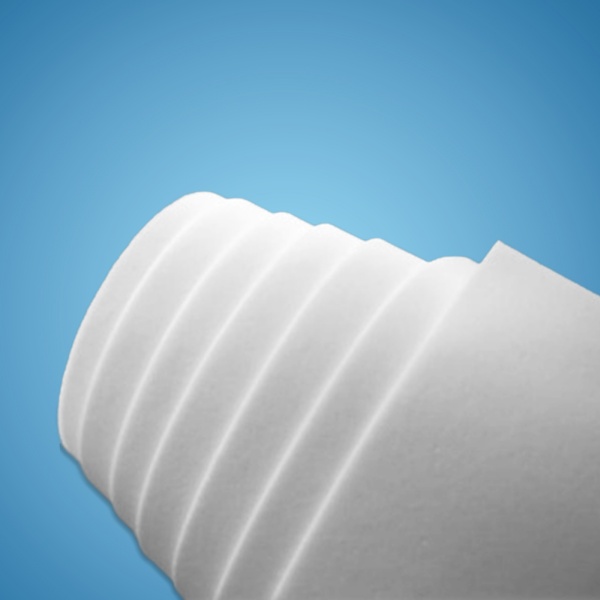
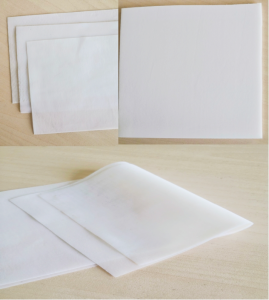
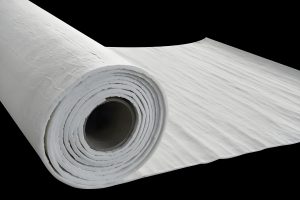
Aerogel Insulation Sponge (AG-Sponge) is a flexible insulation material with low density and low thermal conductivity. Compared with traditional materials, it has excellent sound absorption, flame retardancy, heat insulation, heat stability, hygienic safety and other physical and chemical properties, and good post-processing. It has very important application value in civil, industrial, construction, transportation, aviation, military, daily chemicals, electronic information and other fields, especially in environmental conditions with flame retardancy, high temperature and low-frequency noise absorption requirements, and has become an irreplaceable product in the domestic new material industry.
Product Features
- Strong thermal insulation performance: thermal conductivity is less than 0.018 W/(m·K) at room temperature
- Good flame retardant performance: V-0 grade flame retardant
- High and low temperature stability: stable from 180 to 200 ℃
- Convenient post-processing: soft, thin and easy to cut
- Good sound absorption performance: f=2000Hz, sound absorption coefficient 0.92, noise reduction coefficient: NRC=0.90
Product Parameters
Product Parameters | Technical Data | Standard |
|---|---|---|
Thickness | 0.5mm-4mm Customization | Micrometer |
Width | 1200mmWide roll or customized | — |
Operating temperature | -180~ 200 ℃ | GB/T 34336-2017 |
Density | 110±20 kg/m³ | GB/T 6343-2009 |
Thermal conductivity | ≤0.018 W/(m·K) | GB/T 10295-2008 |
Flame retardant grade | V-0 | UL-94 |
Permanent compression set | ≤5% | GB/T 6669-2008 |
Prohibited substances | Compliant | RoHS & REACH |
Precautions For Use:
- Aerogel insulation cotton can be coated on one or both sides, with double-sided adhesive on the back, and can be customized as needed.
- The tensile strength of aerogel insulation cotton is not high, and it may tear and break if it is improperly stressed.
- Aerogel insulation cotton has a certain elasticity and can rebound under pressure, but it will not recover if it exceeds the limit.
- The surface of aerogel insulation cotton may have slight powdering.
Manufacturer & Engineering Notes
Manufacturing & Project Experience
Anchor Aerogel produces AG-Sponge as part of its aerogel materials portfolio and supports buyers from material selection through sampling and repeat supply. Standard format is a 1200 mm wide roll in 0.5-4 mm thickness, but custom widths, thicknesses, single- or double-sided coatings, and adhesive-backed constructions are handled routinely. Our team can review your drawings, prepare cut or laminated samples for evaluation, and align packaging with export logistics. Test data references published standards (GB/T 10295-2008, GB/T 6343-2009, GB/T 34336-2017, UL-94), and current reports or compliance documents are available on request for your qualification files.
Engineering Boundaries & Custom Options
AG-Sponge is a soft, compressible insulation and acoustic layer - not a structural part. Its strengths are the ≤0.018 W/(m·K) conductivity, V-0 rating, NRC 0.90 acoustic performance, and -180 to 200°C range; its limits are modest tensile strength, possible slight surface powdering, and non-recoverable deformation if over-compressed. Design gap thickness so working compression stays within the elastic range, and use coated or laminated faces where particulate control is required. Standard thickness covers 0.5-4 mm; thicker builds need discussion with the factory. Confirm the current TDS and test reports for lot-specific values before design freeze.
Sample Request FAQs
Quick answers about requesting and receiving free samples from Anchor-tech.
Can you provide samples?
Yes. Please share some basic information about your project with us — for example, where the material will be used and at what operating temperature. Rest assured this is only so we can help you choose the most suitable material, model, and specification. We will never disclose your project details to any third party.
Can we still request samples if we cannot disclose any project information?
No. If you are unwilling to share any information about your project, we are not obligated to support your R&D effort. Please respect the labor involved: preparing each sample requires a dedicated colleague and is quite time-consuming. Moreover, without knowing where and how you intend to use our product, we cannot even determine whether it is suitable for your application.
Are samples free, and how much can I request?
We provide 2 free samples of aerogel sponge, each sized 150 mm × 200 mm × T (or A4 size). If you need a larger quantity or many pieces, please let us know the reason — we are glad to support you. However, if you have never seen our sample before and only want to take a look, please do not casually request large amounts. A dedicated colleague must prepare every sample, which takes considerable effort. You may first take a look; once you confirm it is likely suitable for your project, you can request more from us.
Who pays for shipping?
Shipping costs must be borne by the customer. Please provide us with your FedEx account number and the recipient information (including name, address, phone number, postal code, etc.), and we will arrange the shipment for you.
How long does it take to prepare samples?
If the item is in stock, preparation generally takes 3–7 days. If it is out of stock and requires custom manufacturing, it takes 1–2 weeks. We will prepare your samples as quickly as possible.
Frequently Asked Questions about Aerogel Insulation Sponge (AG-Sponge)
Technical answers for overseas buyers, engineers, and project specifiers. For project-critical values, request the current TDS before final design.
AG-Sponge is a flexible aerogel insulation material with low density (110±20 kg/m³) and low thermal conductivity of ≤0.018 W/(m·K) at room temperature, tested per GB/T 10295-2008. It carries a V-0 flame-retardant grade (UL-94), complies with RoHS and REACH prohibited-substance requirements, and offers strong acoustic performance: a sound absorption coefficient of 0.92 at 2000 Hz and a noise reduction coefficient of NRC 0.90. Permanent compression set is ≤5% per GB/T 6669-2008. The material is soft, thin, and easy to cut, supporting convenient post-processing into project-specific shapes.
AG-Sponge is positioned for civil, industrial, construction, transportation, aviation, military, daily chemical, and electronic information fields – especially environments requiring flame retardancy, high-temperature resistance, and low-frequency noise absorption together. Its operating temperature range of -180 to 200°C (per GB/T 34336-2017) covers cryogenic-leaning through elevated-temperature service. Typical uses combine thermal insulation with acoustic damping, such as equipment enclosures, transportation interiors, and electronic assemblies where both heat control and noise reduction are specified. The V-0 flame rating and RoHS/REACH compliance support use in regulated products and export markets.
Standard thickness runs from 0.5 to 4 mm with customization available, and the standard width is a 1200 mm wide roll, with customized widths also possible. The material can be coated on one or both sides and supplied with double-sided adhesive on the back, customized as needed – useful when the sponge must be fixed inside an enclosure without additional fastening. Because it is soft and easy to cut, it converts readily into die-cut parts, strips, or laminated composites. Buyers can submit drawings so the factory can confirm achievable tolerances and propose the most material-efficient converting format for the application.
The manufacturer lists several precautions. Tensile strength is not high, so the material can tear or break if improperly stressed – avoid stretching during installation. It has some elasticity and rebounds under pressure, but compression beyond the limit causes permanent deformation; the published permanent compression set is ≤5% under standard test conditions, which should not be confused with overload behavior. The surface may show slight powdering, so sealed or coated constructions are advisable where particulate control matters. Store and handle rolls to avoid creasing, and validate compression loading in the actual assembly before finalizing gap designs.
The published parameter table states RoHS and REACH compliance for prohibited substances, and a V-0 flame-retardant grade under UL-94 – both relevant for products sold into regulated markets. Thermal conductivity is tested to GB/T 10295-2008, density to GB/T 6343-2009, and operating temperature to GB/T 34336-2017, giving traceable test standards for each key property. For projects requiring documentation, the factory can provide current test reports or certificates on request. As with any material qualification, buyers should verify that the specific lot’s documentation matches their compliance checklist before releasing the material to production.
 English
  Chinese (China)
  Portuguese
  Spanish
  French
  Italian
  Turkish
  Vietnamese
  German
  Japanese
  Korean
  Hindi
Hindi  Arabic
  Polish
  Chinese (Taiwan)
  Malay
Malay  Thai
Thai  Finnish
  Dutch
Dutch  Swedish
  Slovenian