Application of Aerogel Coating in Thermal Insulation for Metal Chemical Storage Tanks
Table of Contents
Description of Metal Chemical Storage Tanks
Chemical storage tanks are essential for storing raw materials and processing them into specified products. Semi-finished and finished chemical products rely on these tanks for processing. In particular, for metallic chemical storage tanks designed to prevent low temperatures or condensation, effective insulation during winter is crucial. Inadequate insulation can lead to chemical materials becoming non-flowable or unusable, ultimately causing production shutdowns.
Current Status and Issues in Tank Insulation
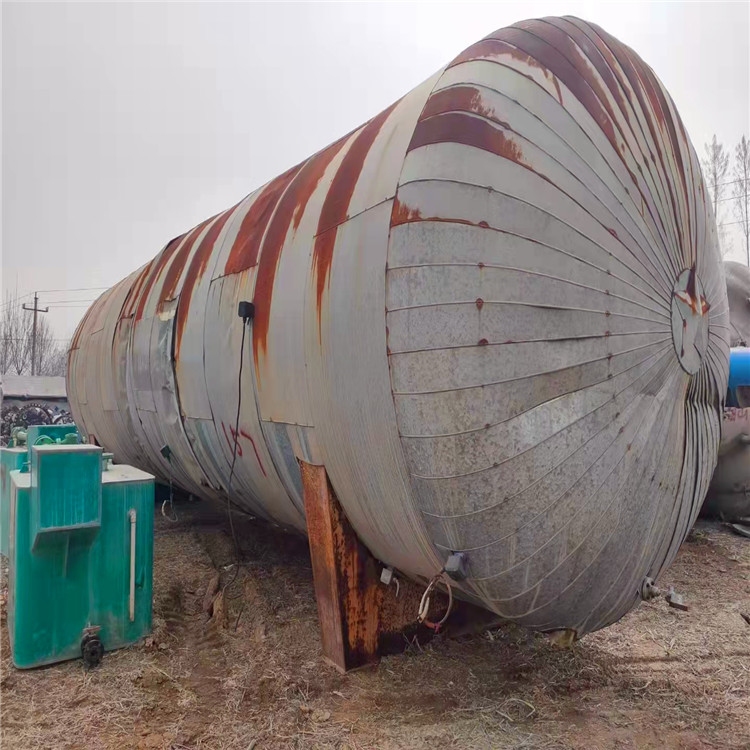
Taking oil storage tanks as an example, the current insulation of the outer walls typically involves a fixed structure using angle steel and flat steel, with insulation materials secured using steel strips. The final step includes installing a metal protective layer. Common insulation materials include rock wool, mineral wool, and silicate materials. Over long-term use, this insulation structure faces several problems:
- Under the influence of wind force, some protective layers may detach or develop edge openings due to improper construction, leading to water ingress into the insulation layer.
- Traditional insulation materials have a porous structure, making them prone to water absorption and failure, resulting in decreased insulation effectiveness and a shorter lifespan.
- Water ingress into the insulation layer creates a moisture-sealed system beneath the protective layer, accelerating corrosion below the insulation layer. This is particularly problematic in areas where accessories like thermocouples, thermometers, and safety valves are installed on the pipe walls.
- Due to limitations in traditional insulation materials, tank tops are generally left uninsulated, causing significant heat dissipation issues, especially in floating roof tanks where the proportion of heat dissipation area on the tank top increases when the tank is not fully filled.
In situations where traditional insulation materials cannot address these issues, it is recommended to use the aerogel insulation coating system for tank insulation.
Advantages of Aerogel Coating in Industrial Tank Insulation
The Anchor-tech aerogel insulation coating system consists of water-based multifunctional primer + aerogel insulation intermediate coating + water-based solar reflective topcoat.
- Thermal Insulation Performance: The ANCHOR-TECH aerogel insulation intermediate coating effectively reduces heat conduction, providing excellent thermal insulation performance.
- Reflectivity and Corrosion Resistance: The ANCHOR-TECH water-based solar reflective topcoat has high reflectivity and emissivity, reducing solar radiation absorption and offering superior thermal insulation. The entire coating system works synergistically to ensure excellent thermal insulation effectiveness. The ANCHOR-TECH water-based multifunctional primer has high acid and alkali resistance, acting as a corrosion-resistant layer.
- Hydrophobicity: The aerogel insulation coating exhibits good hydrophobicity, effectively preventing the corrosion issues observed in traditional materials beneath the insulation layer.
- Fire Performance: The combustion performance meets A2-level fire resistance.
- Anti-Staining Performance: The coating itself has self-cleaning ability, maintaining an aesthetically pleasing appearance over an extended period.
- Environmental Performance: All materials used are non-toxic and environmentally friendly, causing no pollution harm to the environment.
Additionally, using the aerogel insulation coating system can effectively address tank top heat dissipation issues, reducing construction difficulty.
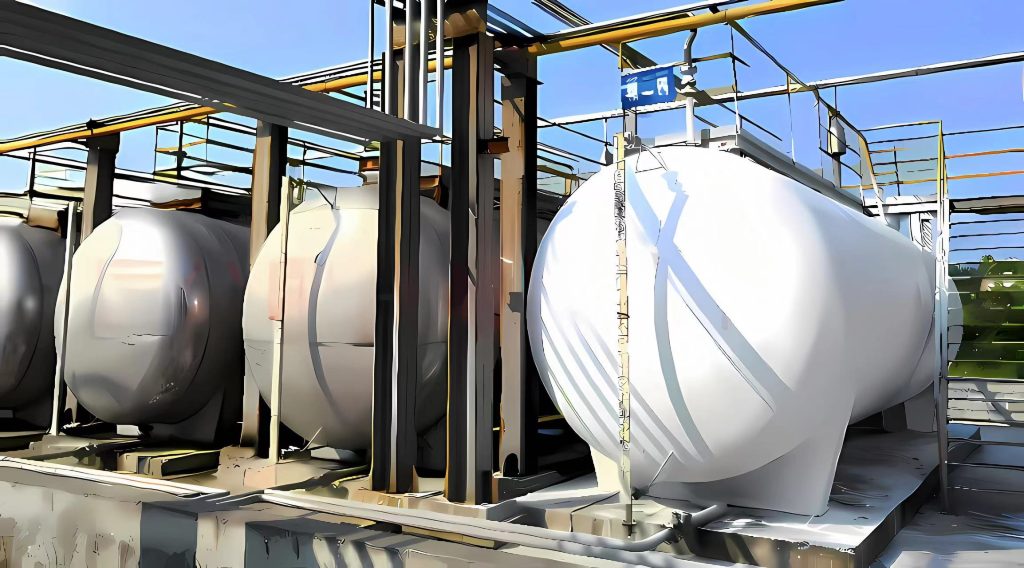
In summary, replacing traditional insulation structures with the aerogel insulation coating system for tank insulation offers energy efficiency, effectiveness, and environmental benefits. This solution effectively addresses issues associated with traditional insulation materials, such as poor insulation performance and corrosion beneath the insulation layer.
Thermal Insulation Effect of Anchor-tech Aerogel Coating on Industrial Tanks
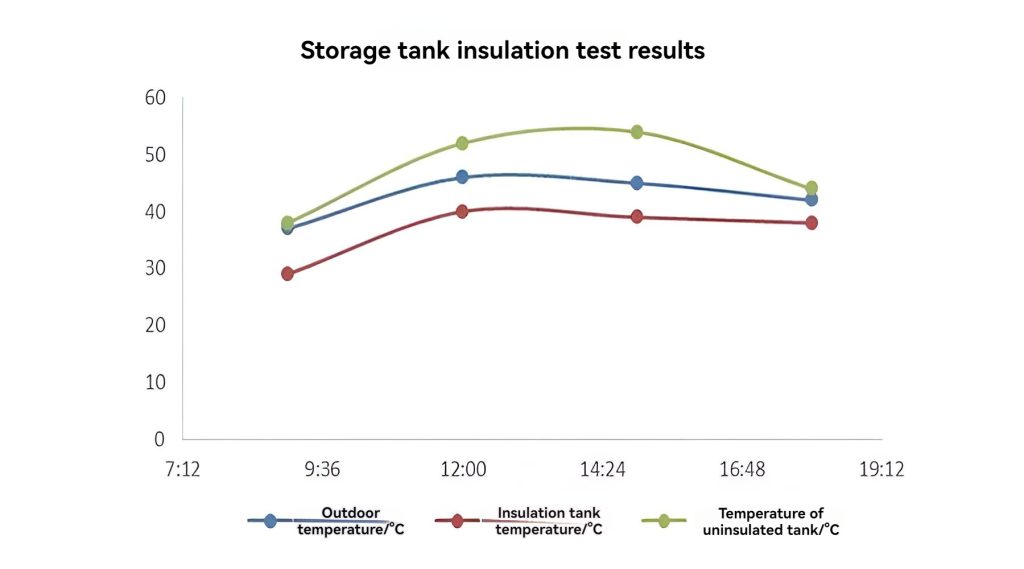
We conducted experiments on a 60m3 outdoor metallic storage tank. The results show that, during summer outdoor temperatures exceeding 35°C, the internal temperature of the tank insulated with Anchor-tech aerogel water-based thermal insulation coating is approximately 10°C lower than that of a tank without any insulation measures. The maximum temperature difference can reach 16°C, demonstrating excellent insulation effectiveness during the summer. This significantly reduces the cooling effect of summer rainwater spraying, resulting in noticeable energy savings.
Sample Request FAQs
Quick answers about requesting and receiving free samples from Anchor-tech.
Can you provide samples?
Yes. Please share some basic information about your project with us — for example, where the material will be used and at what operating temperature. Rest assured this is only so we can help you choose the most suitable material, model, and specification. We will never disclose your project details to any third party.
Can we still request samples if we cannot disclose any project information?
No. If you are unwilling to share any information about your project, we are not obligated to support your R&D effort. Please respect the labor involved: preparing each sample requires a dedicated colleague and is quite time-consuming. Moreover, without knowing where and how you intend to use our product, we cannot even determine whether it is suitable for your application.
Are samples free, and how much can I request?
We provide free samples of aerogel coating up to 100 g. If you need a larger quantity or many pieces, please let us know the reason — we are glad to support you. However, if you have never seen our sample before and only want to take a look, please do not casually request large amounts. A dedicated colleague must prepare every sample, which takes considerable effort. You may first take a look; once you confirm it is likely suitable for your project, you can request more from us.
Who pays for shipping?
Shipping costs must be borne by the customer. Please provide us with your FedEx account number and the recipient information (including name, address, phone number, postal code, etc.), and we will arrange the shipment for you.
How long does it take to prepare samples?
If the item is in stock, preparation generally takes 3–7 days. If it is out of stock and requires custom manufacturing, it takes 1–2 weeks. We will prepare your samples as quickly as possible.
Related Articles & Applications
Industrial Equipment Aerogel Insulation: A Real Steam-Line Retrofit Case
Aerogel felt and coating for industrial equipment and pipeline insulation. Reduce energy loss and...
Read more →
Aerogel for Industrial Pipeline Insulation: One-Third the Thickness, Same Performance
How aerogel insulation blankets cut heat loss and condensation on industrial pipelines. Thinner i...
Read more →
Aerogel Blankets for LNG Storage & Transport: Proven Cryogenic Performance
Aerogel felt for LNG tanks and cryogenic pipelines. Stable insulation from -200°C, hydrophobic an...
Read more →
Aerogel Powder & Slurry: Functional Fillers for Coatings and Composites
How aerogel powder and slurry are used in coatings, composites and insulation. Explore key applic...
Read more →