
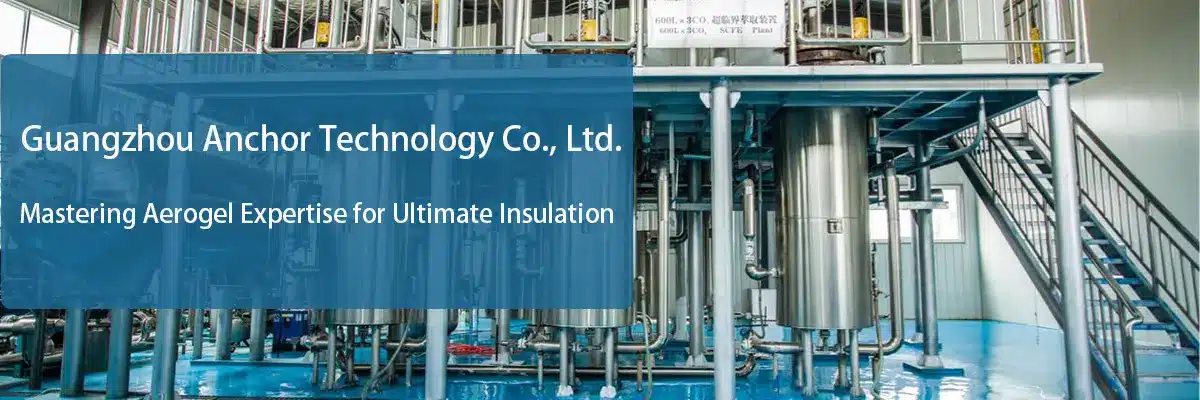
Advantages of Aerogel Felt in the LNG Field
Current State of LNG Insulation:
In LNG engineering and other cryogenic projects, temperatures involved in low and ultra-low temperature equipment typically range from -40 to -170 degrees Celsius. The most commonly used cryogenic insulation materials include PUR/PIR, foamed glass, rubber and plastic, modified phenolic foam, etc. These materials represent a significant improvement in both performance and construction compared to the previously used perlite materials. The effectiveness of cryogenic insulation not only impacts the overall efficiency of the equipment but also plays a crucial role in ensuring the safety of the facility. Appropriate insulation materials not only reduce energy consumption and minimize refrigeration loss but also provide assurance for environmental compliance, ensuring safe production and creating better economic benefits. The emergence of aerogel-type insulation materials seems tailor-made for cryogenic insulation and is already widely applied both domestically and internationally.

Current State of LNG Refrigeration:
- Traditional materials experience rapid deterioration in insulation performance, resulting in high maintenance costs.
- Inadequate insulation performance and significant refrigeration loss of traditional materials pose risks to the storage and transportation of natural gas or other compressed gases.
- Large thickness of traditional materials complicates the design of densely arranged pipelines.
- Poor insulation effectiveness leads to corrosion due to condensation on pipes.
- Excessive condensation water easily renders the insulation layer ineffective.
- Waterproof properties of organic materials are present but fail to meet fire protection requirements.
Advantages of Aerogel Super Material:
- Optimal low-temperature stability; can maintain refrigeration performance and excellent flexibility even at -200℃ without cracking.
- Outstanding dimensional stability; nanoscale special structure resists internal stress caused by pipeline expansion without the need for expansion joints.
- Excellent hydrophobicity of aerogel material effectively prevents water from penetrating the surface of metal pipelines, preventing corrosion and preserving insulation effectiveness.
- Inorganic material composition, primarily SiO2, without adhesives, ensures stable performance, safety, fire resistance, and an extended lifespan.
- Convenient material cutting and construction, resulting in low maintenance costs.
- Superior refrigeration performance; thermal conductivity at room temperature is only 0.018W/m·k, and at ultra-low temperatures, the thermal conductivity is <0.01W/m·k. This significantly reduces the required thickness of the refrigeration layer, effectively lowering refrigeration loss and optimizing the design of densely arranged pipelines.
Performance Comparison between Aerogel and Traditional Refrigeration Materials:
| Aerogel composite felt pad | Foam glass | Foam PIR |
Thermal conductivity | 0.010~0.020 | 0.050~0.080 | 0.030~0.040 |
Bulk density(kg/m³) | 190 | 150~240 | 50~180 |
Cold insulation thickness | 0.50 | 2 | 1 |
Water absorption rate(vol%) | 0.36 | 2 | 1.5 |
Waterproofness | Overall waterproofing, hydrophobicity ≥ 99%, nano structure | Poor waterproofing requires additional waterproofing measures | Poor waterproofing requires additional waterproofing measures |
Constructability | Can be rolled into rolls, shaped parts, with good flexibility and easy construction | Very poor, high loss | Normal, can be foamed on site, but the foaming uniformity is poor. |
Ultra low temperature stability | Excellent, expected lifespan 5-10 years | Moderate stability, with a lifespan of approximately 2 years | Easy to age, reduced strength, poor stability, replacement required from 6 months to 1 year |
dimensional stability | 0.45% | poor | poor |
Reusability | Reusable during disassembly and maintenance | Fragile during disassembly and unusable | Fragile during disassembly and unusable |
Economic Comparison between Aerogel and Traditional Refrigeration Materials:
| Aerogel insulation blanket | Foamed glass | PIR | |
|---|---|---|---|
| Expected Thickness of Insulation Layer (mm) | 40 | 160 | 80 |
| Expected Surface Temperature (℃) | 30 | 30 | 30 |
| Volume of Insulation Material (m³) | 17.5 | 140 | 45.2 |
| Main Material Cost (in thousands of yuan) | 18 | 14 | 7 |
| Construction and Auxiliary Material Cost (in thousands of yuan) | 3 | 8 | 5 |
| Cooling Loss Situation | 约1/3 | 2 | 1 |
| Maintenance Situation | Almost negligible, even in the case of physical damage. Easy to repair | Minimal maintenance required; after reaching the end of its lifespan, a complete replacement is recommended. | Significant aging issues; requires major repairs every 3-6 months, with maintenance costs ranging from 10,000 to 20,000 yuan per occurrence. |
| Buried Pipeline | Small volume, if the earthwork project is one-third of the traditional prefabricated pipeline, it results in lower transportation costs due to the reduced volume. | The volume is too large, making it impractical for use as a prefabricated pipeline. | The volume is large, making it impractical for the production of prefabricated pipelines. |
Note: Calculations are based on a pipeline with a diameter of 100mm and a length of 1km
Sample Request FAQs
Quick answers about requesting and receiving free samples from Anchor-tech.
Can you provide samples?
Yes. Please share some basic information about your project with us — for example, where the material will be used and at what operating temperature. Rest assured this is only so we can help you choose the most suitable material, model, and specification. We will never disclose your project details to any third party.
Can we still request samples if we cannot disclose any project information?
No. If you are unwilling to share any information about your project, we are not obligated to support your R&D effort. Please respect the labor involved: preparing each sample requires a dedicated colleague and is quite time-consuming. Moreover, without knowing where and how you intend to use our product, we cannot even determine whether it is suitable for your application.
Are samples free, and how much can I request?
We provide 2 free samples of aerogel felt, each sized 150 mm × 200 mm × T (or A4 size). If you need a larger quantity or many pieces, please let us know the reason — we are glad to support you. However, if you have never seen our sample before and only want to take a look, please do not casually request large amounts. A dedicated colleague must prepare every sample, which takes considerable effort. You may first take a look; once you confirm it is likely suitable for your project, you can request more from us.
Who pays for shipping?
Shipping costs must be borne by the customer. Please provide us with your FedEx account number and the recipient information (including name, address, phone number, postal code, etc.), and we will arrange the shipment for you.
How long does it take to prepare samples?
If the item is in stock, preparation generally takes 3–7 days. If it is out of stock and requires custom manufacturing, it takes 1–2 weeks. We will prepare your samples as quickly as possible.
Aerogel for LNG: Storing and Moving Cryogen
Aerogel for LNG duty is qualified down to about minus 200 C and stays dry, so tanks and trailers avoid the corrosion under insulation that shortens foam or perlite service life.
PET Cryogenic Aerogel Blanket (AG20)
The PET cryogenic aerogel blanket, AG20, is our cryogenic grade for LNG and deep-cold lines, specified to about minus 200 C with a dry, stable core.
Aerogel Cryogenic Insulation Performance
Aerogel cryogenic insulation holds about 0.019 to 0.021 W per m K at 25 C and keeps performance to minus 200 C, which is why it replaces thick foam wraps on LNG trains.
Product page: PET cryogenic aerogel blanket (AG20) – flexible insulation for -200°C LNG storage and pipelines.
Related Articles & Applications
Industrial Equipment Aerogel Insulation: A Real Steam-Line Retrofit Case
Aerogel felt and coating for industrial equipment and pipeline insulation. Reduce energy loss and...
Read more →
Aerogel for Industrial Pipeline Insulation: One-Third the Thickness, Same Performance
How aerogel insulation blankets cut heat loss and condensation on industrial pipelines. Thinner i...
Read more →
Aerogel Powder & Slurry: Functional Fillers for Coatings and Composites
How aerogel powder and slurry are used in coatings, composites and insulation. Explore key applic...
Read more →
Aerogel for Electronics Thermal Management: Thin Films That Protect Components
Aerogel provides a unique thermal management solution for electronic products. Ultra-thin insulat...
Read more → English
  Chinese (China)
  Portuguese
  Spanish
  French
  Italian
  Turkish
  Vietnamese
  German
  Japanese
  Korean
  Hindi
Hindi  Arabic
  Polish
  Chinese (Taiwan)
  Malay
Malay  Thai
Thai  Finnish
  Dutch
Dutch  Swedish
  Slovenian