Guangzhou, Guangdong , China.

Guangzhou Anchor Technology aerogel manufacturing facility banner

Innovative Applications of Aerogel Materials in Thermal Insulation

Aerogel Aqueous Slurry

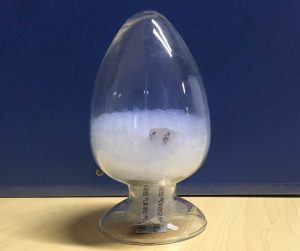
Aerogel aqueous slurry involves dispersing aerogel powder uniformly into an aqueous slurry system, forming a gelatinous aerogel slurry. After the evaporation of water from the slurry, the remaining components consist entirely of aerogel, capable of providing both hydrophobic and thermal insulation effects. This slurry allows for easy control of aerogel dosage, convenient packaging, and transportation, while eliminating the dust pollution associated with powder addition.

Unique Properties of Aerogel Thermal Insulation Coating

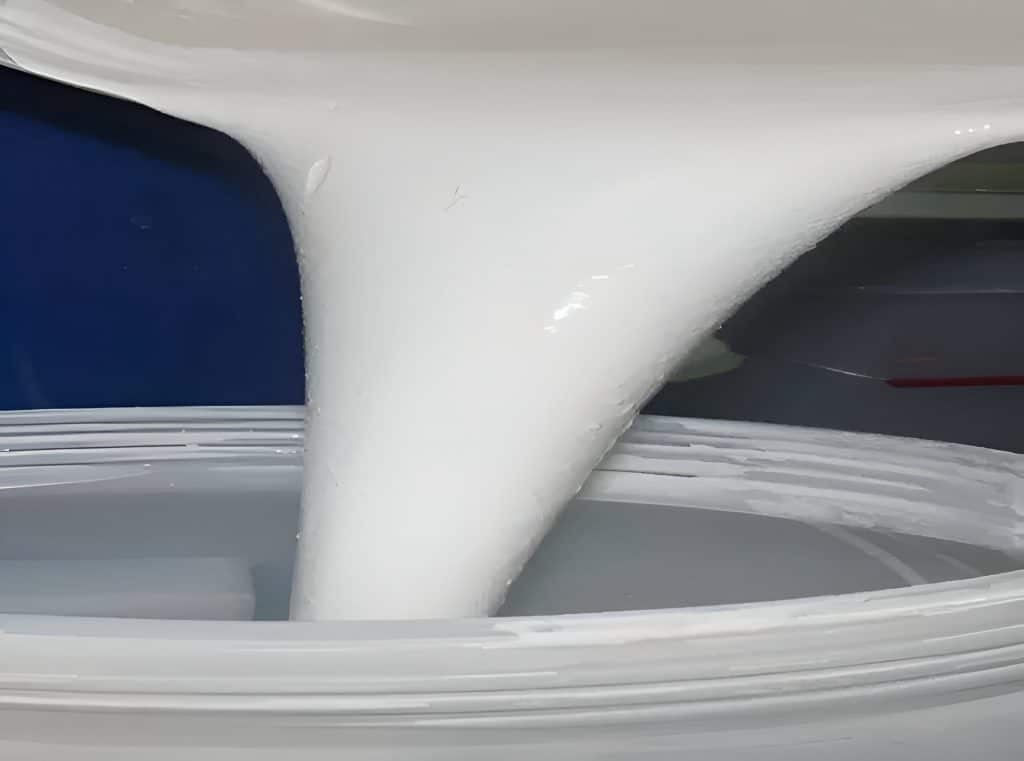
Aerogel thermal insulation coating incorporates hydrophobic and insulating aerogel uniformly into a water-based coating system, enabling the coated layer to possess efficient thermal insulation properties on top of its original performance. Through the mechanism of film formation after coating application, the dried coating exhibits outstanding insulation performance.

Aerogel Aqueous Slurry
Aerogel Slurry
Aerogel Coating
Aerogel Coating

In contrast to aerogel slurry, aerogel thermal insulation coating has the advantage of direct application without the need for composite integration with fiber or resin systems.

Differences Between Aerogel Coating and Hollow Glass Microsphere Coating

Adding hollow glass microspheres to coatings significantly enhances insulation, but their thermal conductivity sharply increases at temperatures above 150°C, leading to a substantial decrease in insulation performance. On the other hand, the thermal conductivity of aerogel in aerogel thermal insulation coatings exhibits a minimal increase above 150°C, making it far superior to hollow glass microspheres. Studies demonstrate that, when used as insulation fillers in coatings, aerogel outperforms hollow glass microspheres in insulation performance.

Hollow Glass Microsphere Coating

Outstanding Advantages of Aerogel Coating

  1. Excellent Thermal Insulation Performance: A 7mm aerogel thermal insulation coating can reduce the temperature of a 350°C heat source to 105°C and a 300°C heat source to 95°C. The material’s thermal conductivity at room temperature is 0.028 W/m·K, and its thickness for equivalent insulation is only 1/5 to 1/3 of traditional materials.

  2. Stable Performance: The inherent nanoscale three-dimensional network structure of aerogel ensures that its thermal conductivity remains virtually unchanged throughout its usage lifecycle.

  3. Environmentally Friendly and Non-Toxic: Aerogel thermal insulation coatings undergo environmental testing by authoritative institutions and are free of heavy metals, formaldehyde, and other harmful substances.

  4. Class A Fire Rating: The coating itself is non-combustible and exhibits a certain degree of flame resistance, achieving a Class A1 fire rating. This resolves the conflict between insulation and fire protection.

  5. Convenient Application: Short construction periods and convenient application methods, such as close-range, high-pressure spraying or scraping, make aerogel coating construction more time-efficient than traditional thermal insulation materials. This significantly shortens construction periods, indirectly reducing financial costs. On-site construction supervision is facilitated, and the coating is easy to repair, with simple and convenient maintenance.

Wide Applications of Aerogel Coating

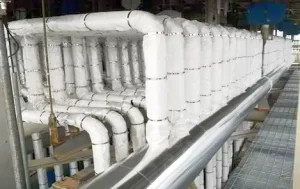
Aerogel thermal insulation coatings find extensive applications in various fields, including construction, transportation, offshore drilling platforms, chemical storage tanks, and petroleum pipelines. Applying aerogel coatings to building surfaces enhances the thermal insulation of the structure, leading to reduced energy consumption for air conditioning. These coatings are not limited to external wall insulation but are also suitable for internal walls, tops, and bottoms of buildings. Successful applications at the 2010 Shanghai World Expo Zero Carbon Pavilion and Vanke Research Building highlight the significant energy-saving effects of these coatings. Combining aerogel coatings with AG65 aerogel felts in industrial pipelines results in substantial savings, with an average energy consumption per kilometer of high-temperature steam pipeline leading to savings of $2.5 million. In heating pipeline insulation material renovations, ideal conditions allow for the recovery of renovation costs in approximately one year.

aerogel coating insulated tank

Sample Request FAQs

Quick answers about requesting and receiving free samples from Anchor-tech.

Can you provide samples?

Yes. Please share some basic information about your project with us — for example, where the material will be used and at what operating temperature. Rest assured this is only so we can help you choose the most suitable material, model, and specification. We will never disclose your project details to any third party.

Can we still request samples if we cannot disclose any project information?

No. If you are unwilling to share any information about your project, we are not obligated to support your R&D effort. Please respect the labor involved: preparing each sample requires a dedicated colleague and is quite time-consuming. Moreover, without knowing where and how you intend to use our product, we cannot even determine whether it is suitable for your application.

Are samples free, and how much can I request?

We provide free samples of aerogel coating up to 100 g. If you need a larger quantity or many pieces, please let us know the reason — we are glad to support you. However, if you have never seen our sample before and only want to take a look, please do not casually request large amounts. A dedicated colleague must prepare every sample, which takes considerable effort. You may first take a look; once you confirm it is likely suitable for your project, you can request more from us.

Who pays for shipping?

Shipping costs must be borne by the customer. Please provide us with your FedEx account number and the recipient information (including name, address, phone number, postal code, etc.), and we will arrange the shipment for you.

How long does it take to prepare samples?

If the item is in stock, preparation generally takes 3–7 days. If it is out of stock and requires custom manufacturing, it takes 1–2 weeks. We will prepare your samples as quickly as possible.