
Aerogel Powder
Product Description:
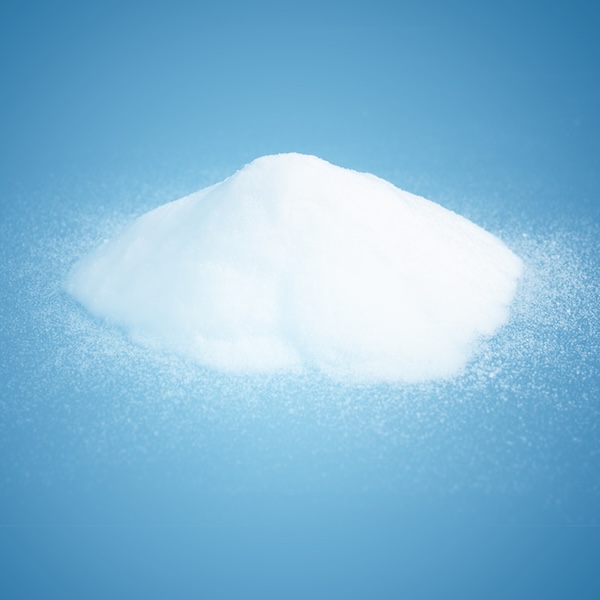
Aerogel powder is produced by finely grinding pure aerogel blocks. Unlike aerogel particles, it features a uniform particle size, making it ideal as a raw material additive in aerogel-based insulation or fireproof coatings. Thanks to its high fire-resistance rating, high porosity, large specific surface area, and ultra-low density, coatings incorporating aerogel powder deliver excellent thermal insulation, superior fire resistance, and outstanding sound insulation. Such coatings can be used not only as building coatings for both interior and exterior walls but also as industrial coatings directly applied to metal surfaces, functioning as highly efficient thermal insulation and fireproof coatings. In addition, aerogel powder can be added as an additive to nano-insulation panels, insulating mortars, gypsum boards, and VOC adsorbents, thereby significantly enhancing product performance.
Technical Parameters:
Product Parameters | ||
|---|---|---|
Product model | AG-PD05 | AG-PD20 |
diameter(u m) | ≈5 | ≈20 |
Color | White | |
Thermal conductivity(W/m • K) | 0.17-0.23 | |
Application temperature(“C) | -250-800 | |
Spreific surface area(m2/g) | 400-700 | |
Pore size(nm) | ≈15 | |
Bulk density(g/cm3) | 0.06~0.12 | |
Porosity(%) | ≥90% | |
Hydrophobicity(° ) | 145° | |
Product Advantages:
- Ultra-low thermal conductivity with excellent insulation performance
- Density as low as 60–110 kg/m³
- Ultra-high specific surface area
- Excellent hydrophobic properties
- Superior adsorption capacity
- Outstanding sound absorption and noise reduction properties
Application Areas:
- Building thermal insulation and fireproof coatings
- Industrial thermal insulation and fireproof coatings
- Insulating mortars
- Fire-resistant gypsum boards
- Nano microporous boards
- Insulating textiles
- VOC adsorbents
Manufacturer & Engineering Notes
Manufacturing & Project Experience
Anchor Aerogel produces aerogel powder by finely grinding pure aerogel blocks, offering two published models - AG-PD05 (≈5 μm) and AG-PD20 (≈20 μm) - with uniform particle size for formulation use. We support coating, building-material, and textile manufacturers from grade selection through lab-sample supply and bulk orders, and can advise on dispersion approach, loading levels, and grade choice based on your system. Documented parameters include 400-700 m²/g specific surface area, ≈15 nm pore size, 0.06-0.12 g/cm³ bulk density, ≥90% porosity, and 145° hydrophobicity. Current technical documentation is available on request for your development files.
Engineering Boundaries & Custom Options
Aerogel powder is an additive, not a finished insulation product: final performance is set by your formulation, dispersion quality, and applied film or board density. Published powder parameters describe the raw material; do not use them directly as coating performance claims - measure the finished system. The tabulated conductivity entry should be confirmed in the current TDS, since powder-bed conductivity is method-dependent. Hydrophobicity (145°) affects wetting in water-based systems, so plan surfactant strategy early. The -250 to 800°C material range exceeds typical coating limits; the binder, not the powder, will set the real service ceiling.
Sample Request FAQs
Quick answers about requesting and receiving free samples from Anchor-tech.
Can you provide samples?
Yes. Please share some basic information about your project with us — for example, where the material will be used and at what operating temperature. Rest assured this is only so we can help you choose the most suitable material, model, and specification. We will never disclose your project details to any third party.
Can we still request samples if we cannot disclose any project information?
No. If you are unwilling to share any information about your project, we are not obligated to support your R&D effort. Please respect the labor involved: preparing each sample requires a dedicated colleague and is quite time-consuming. Moreover, without knowing where and how you intend to use our product, we cannot even determine whether it is suitable for your application.
Are samples free, and how much can I request?
We provide free samples of aerogel powder up to 100 g. If you need a larger quantity or many pieces, please let us know the reason — we are glad to support you. However, if you have never seen our sample before and only want to take a look, please do not casually request large amounts. A dedicated colleague must prepare every sample, which takes considerable effort. You may first take a look; once you confirm it is likely suitable for your project, you can request more from us.
Who pays for shipping?
Shipping costs must be borne by the customer. Please provide us with your FedEx account number and the recipient information (including name, address, phone number, postal code, etc.), and we will arrange the shipment for you.
How long does it take to prepare samples?
If the item is in stock, preparation generally takes 3–7 days. If it is out of stock and requires custom manufacturing, it takes 1–2 weeks. We will prepare your samples as quickly as possible.
Frequently Asked Questions about Aerogel Powder
Technical answers for overseas buyers, engineers, and project specifiers. For project-critical values, request the current TDS before final design.
Aerogel powder is produced by finely grinding pure aerogel blocks; unlike aerogel particles, it has a uniform particle size, making it suitable as a raw material additive. Two models are published: AG-PD05 with approximately 5 μm diameter and AG-PD20 with approximately 20 μm, both white. Published parameters include specific surface area of 400-700 m²/g, pore size around 15 nm, bulk density of 0.06-0.12 g/cm³, porosity of at least 90%, hydrophobicity with a 145° contact angle, and an application temperature range of -250 to 800°C.
Aerogel powder is used as a functional additive: in aerogel-based insulation and fireproof coatings for building interiors/exteriors and for direct application on metal surfaces; in insulating mortars, fire-resistant gypsum boards, and nano microporous boards; in insulating textiles; and in VOC adsorbents. Thanks to its high fire-resistance rating, high porosity, large specific surface area, and ultra-low density, coatings incorporating aerogel powder deliver thermal insulation, fire resistance, and sound insulation. Formulators select between the finer AG-PD05 and coarser AG-PD20 based on the target coating or composite system’s rheology and finish requirements.
The manufacturer distinguishes the two by particle size uniformity: aerogel particles are crushed material with no fixed shape or size, used mainly as insulation fill, while aerogel powder is finely ground to a uniform particle size – approximately 5 or 20 μm in the two published models – making it suitable as a controlled additive in coatings, mortars, boards, and textiles where dispersion consistency matters. Powder bulk density is published at 0.06-0.12 g/cm³, and hydrophobicity at a 145° contact angle. If your application involves filling cavities rather than formulation, the particle grade is the more appropriate starting point.
Aerogel powder’s ultra-low density (0.06-0.12 g/cm³) and high porosity (≥90%) mean small weight fractions add significant volume to a formulation, so dosing is typically planned by volume rather than weight. The 145° hydrophobic contact angle aids handling in some systems but may require appropriate wetting agents in water-based coatings – the powder is produced from water-resistant aerogel, so discuss dispersion approach with the factory. Its application temperature range of -250 to 800°C far exceeds most coating service conditions. Start with lab-scale trials to fix loading, dispersion energy, and viscosity before scaling to production batches.
The technical parameters table lists for AG-PD05 and AG-PD20: white color; specific surface area 400-700 m²/g; pore size ≈15 nm; bulk density 0.06-0.12 g/cm³; porosity ≥90%; hydrophobicity 145°; application temperature -250 to 800°C; and a published thermal conductivity entry that should be verified against the current TDS, as tabulated figures for powder beds depend strongly on compaction and test method. For formulation work, request lot-specific data and, where conductivity of the final coating matters, measure the applied coating rather than relying on raw-powder values. Samples of both grades can be arranged for evaluation.
 English
  Chinese (China)
  Portuguese
  Spanish
  French
  Italian
  Turkish
  Vietnamese
  German
  Japanese
  Korean
  Hindi
Hindi  Arabic
  Polish
  Chinese (Taiwan)